

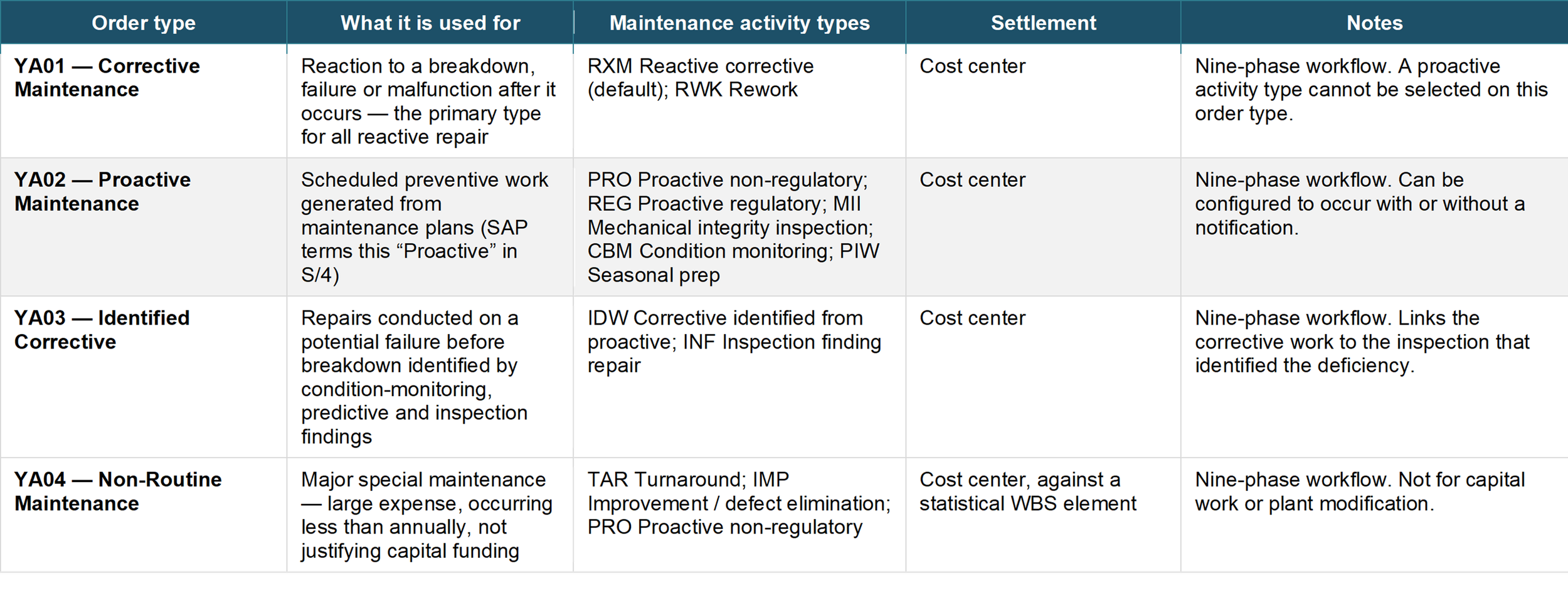
Configure for Execution
Figuring out your proactive/reactive maintenance mix is a science project. Failure modes are in an engineer’s spreadsheet. Delay codes are a Power App project that will die when the Superintendent retires. SAP can do all of that, but not with your legacy configuration mess.
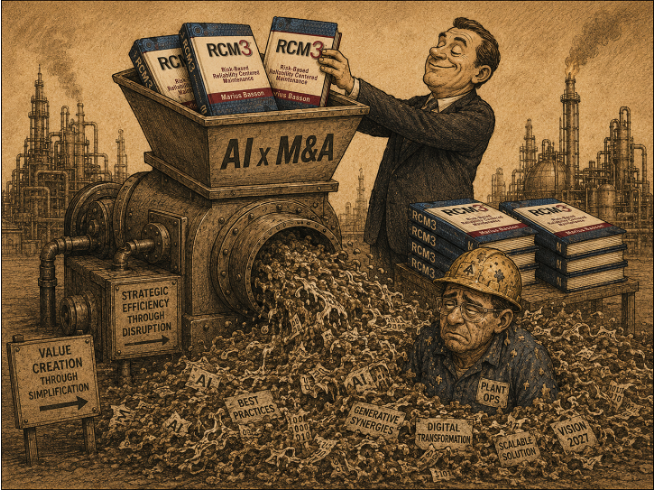
The Slop is the Method
I warned that AI is going to just give you more of the wrong “solutions” louder, faster, and sloppier. The Aladon acquisition is emblematic of that warning - the powerhouse of RCM is getting more software push behind it.
The Permission Slip
The advice industry has told you everything starts with analysis - criticality, FMEA, equipment strategies. Your problem is in execution. This book is your permission slip to start where it counts.
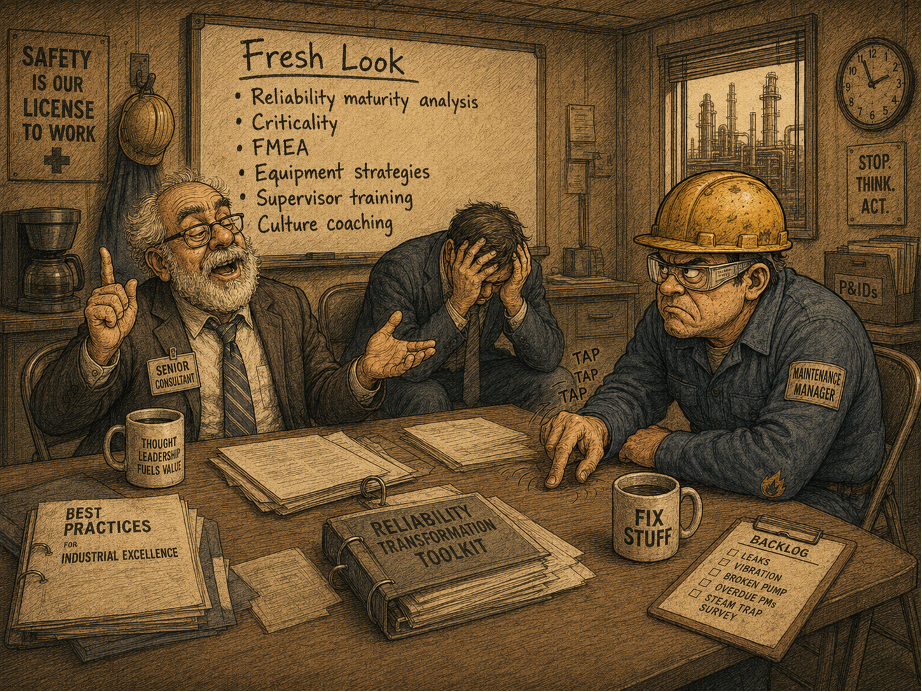
You Need a System – Not a “Fresh Look”
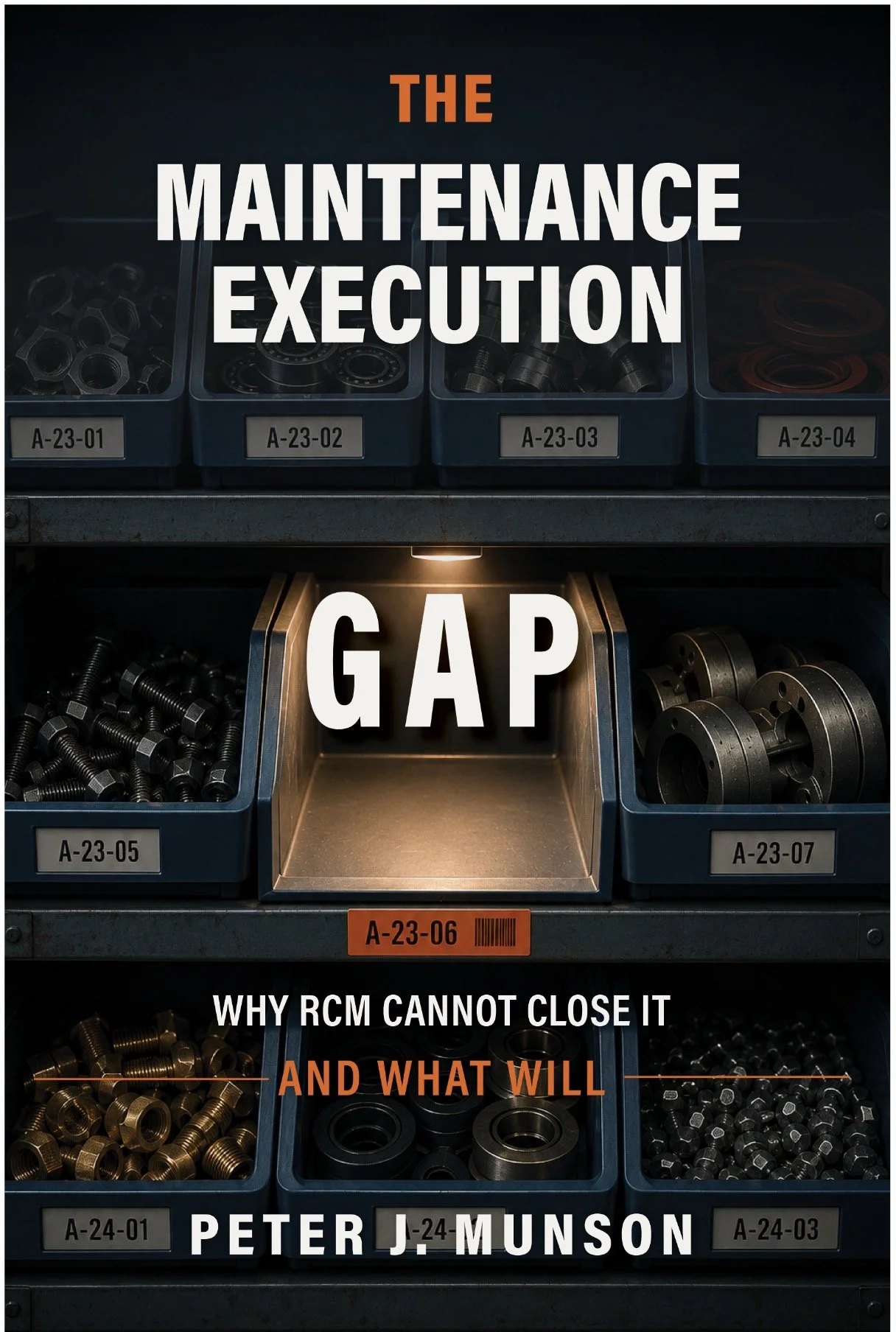
Your VP met a “graybeard“ at a conference. Now you’re getting another fresh look. You know there’s nothing fresh about it. You need a system. That’s what The Maintenance Execution Gap gives you. Coming on 21 July.
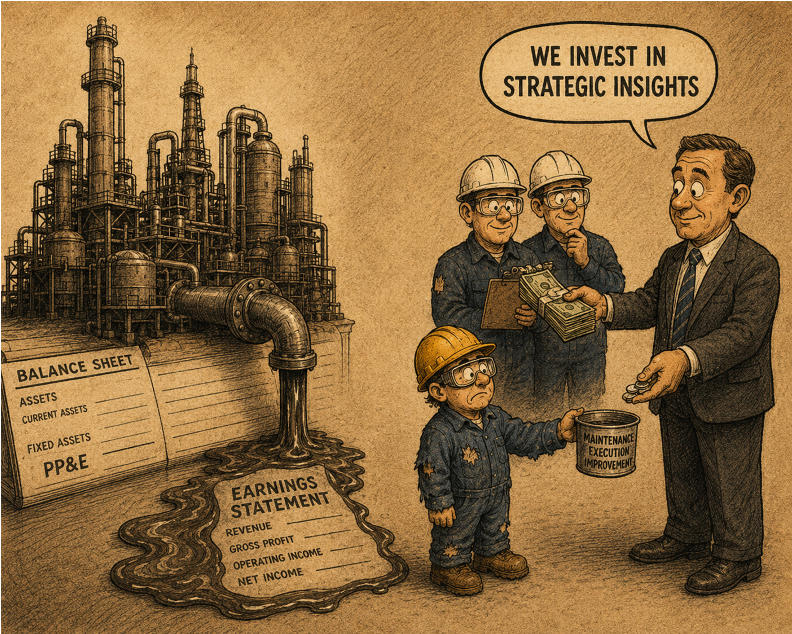
Maintenance is a Value Center… If You Treat It Like One
Roughly half of an industrial company’s balance sheet consists of plant equipment. In processing industries, all of a company’s product - and revenue - comes out of those pipes. Yet, we don’t resource the basics required to professionally maintain that equipment at the point of execution.
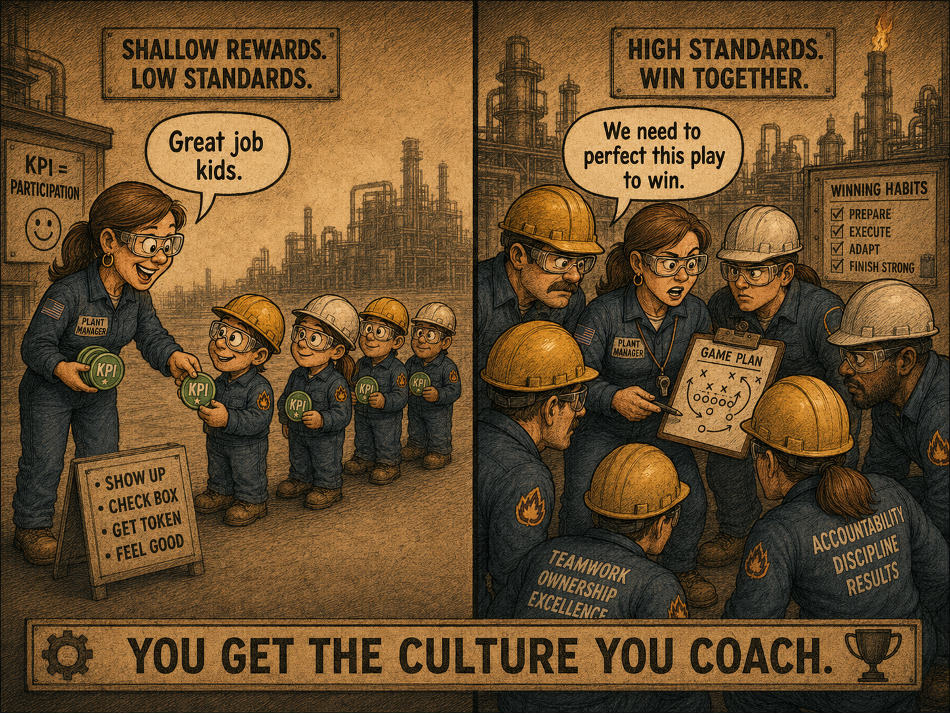
Maintenance Improvement: Participation Trophies or Pro Performance?
Maintenance KPI dashboards are usually participation trophies that have gotten the industry nowhere in decades. This post explains how to use metrics to drive performance like a pro athlete instead of a little leaguer.
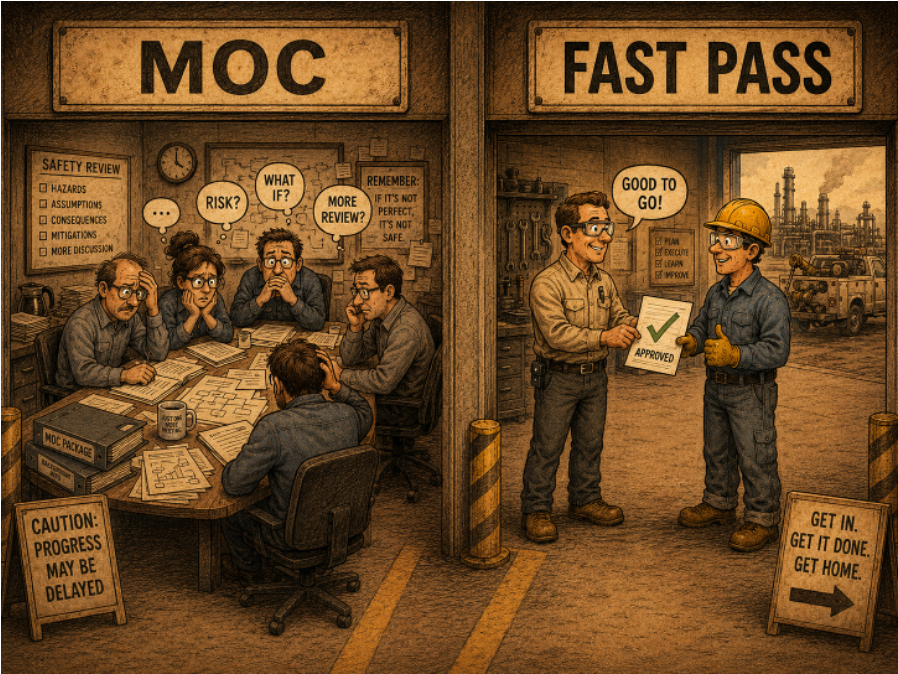
A Fast Pass for PM Improvement: Don’t Let MOC Block Progress
Many PM improvement efforts have languished or even died in the MOC queue. Don’t let safety theater block safe improvements. This post discusses our penchant for analysis and how to create an MOC Fast Pass lane for evidence-backed improvements.
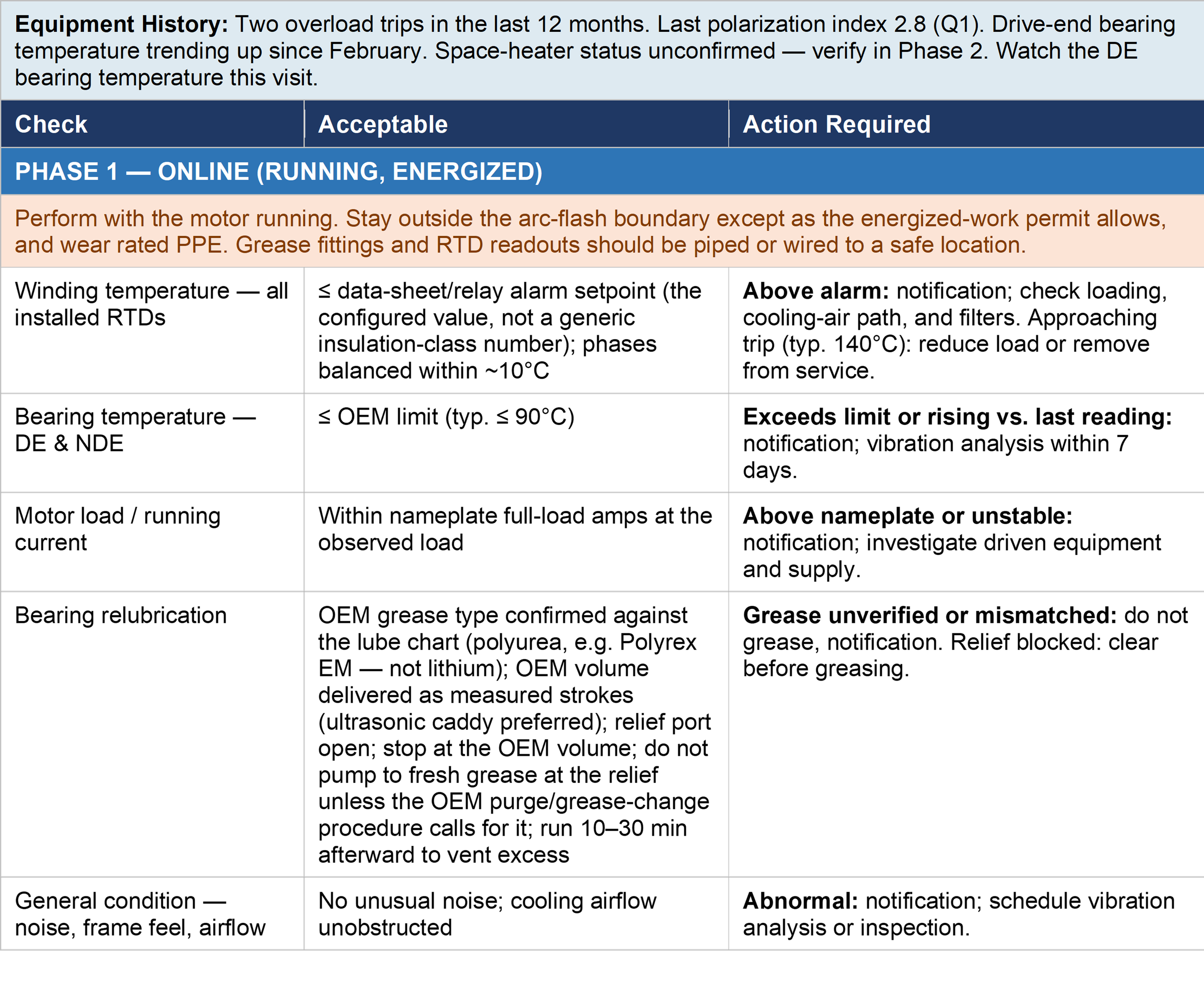
PM Improvement - Today
Follow this blog and start improving your PMs today - no RCM workshop needed.
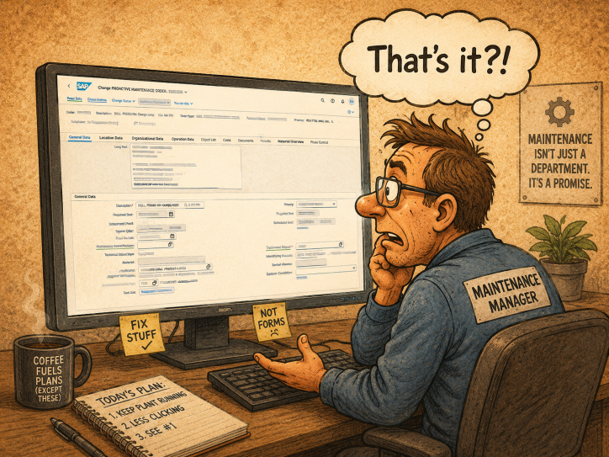
The Maintenance Execution Gap: A 90-Second Test for Your PM Program
Open your CMMS. Pull up some PMs on your most critical pumps. Look at the long text. Do they have acceptance criteria? Or “PM pump - Check oil”? Too many programs claim high PM compliance - but have almost zero defect detection. This is one element of The Maintenance Execution Gap.

On-Spec Fluids and Materials
The work required to ensure your crews are using truly on-spec materials and fluids is very rare, but not terribly difficult. It is too often seen as the last step instead of the foundational step that it is. The blog links to full program manuals with roadmaps for your facility.
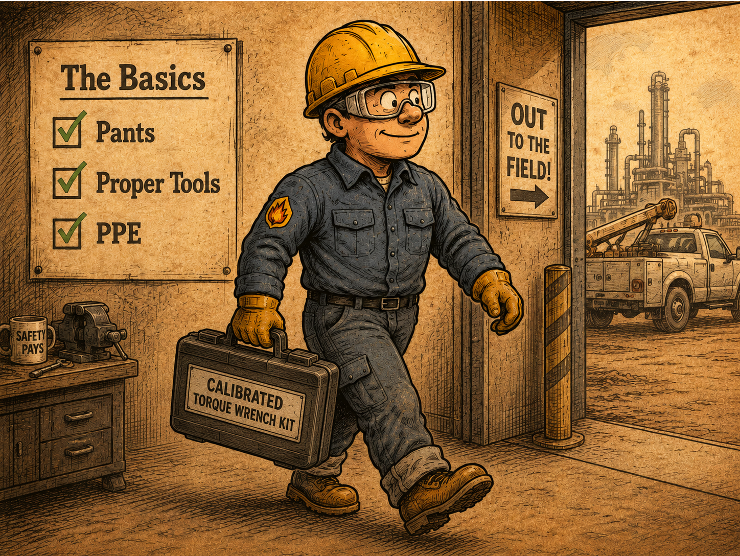
Proper Tools: Non-negotiable, Like PPE
Proper tools are a key element of the Maintenance Execution Framework and are a non-negotiable foundation for professional maintenance. This post introduces our MEF Proper Tools Reference, which specifies key requirements across craft disciplines to conduct maintenance work.
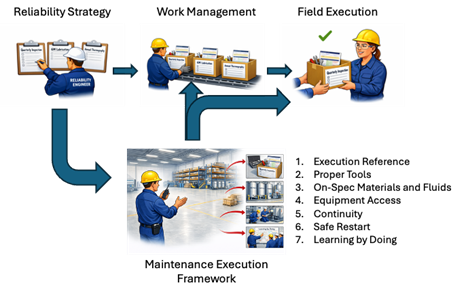
Your PM Schedule is a Conveyer of Empty Boxes
The industry has focused on reliability strategy and work management for decades. The result is a conveyer of empty boxes. The Maintenance Execution Framework fills the boxes with everything technicians need to conduct defect-free maintenance.
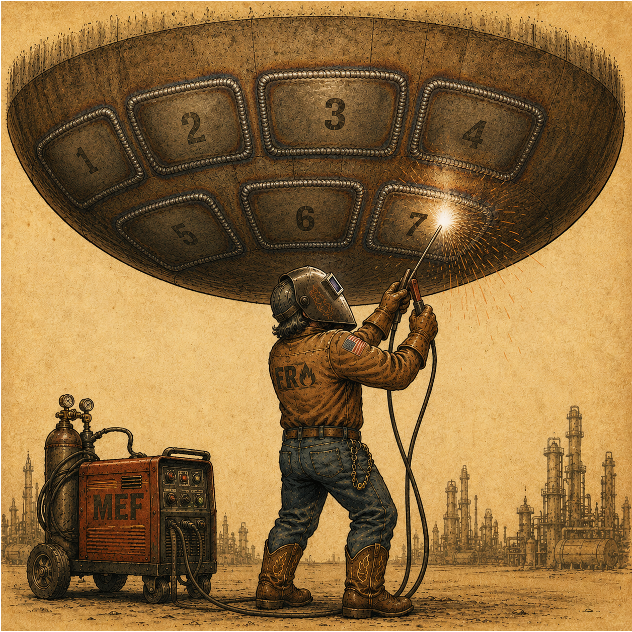
The Maintenance Execution Framework
There are seven, non-negotiable elements to the Maintenance Enablement Framework that form the foundation you need before you see any sustainable reliability improvement. These are not “nice-to-have”, they aren’t “precision”, they’re not optional or world class. They should be as ingrained as your PPE and come first, not last.
The Wisdom of Convention Awaits
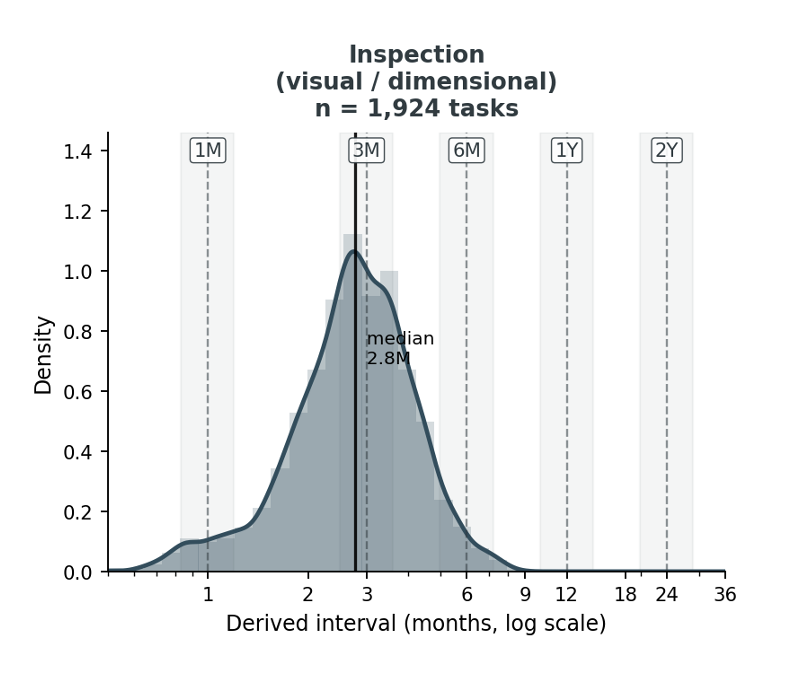
PM intervals suggested in standards and best practices align remarkably well to task intervals prescribed from failure interval modeling. There is wisdom in over a century of experience codified in respected sources. The point here is not to advocate a quarterly set it and forget it interval. The point here is to deploy and discover. Take a solid quarterly baseline, modify it for your special equipment, and spend 18 months dialing it in based on real data rather than 18 months doing RCM before deploying.
Tear Down this RCM Wall
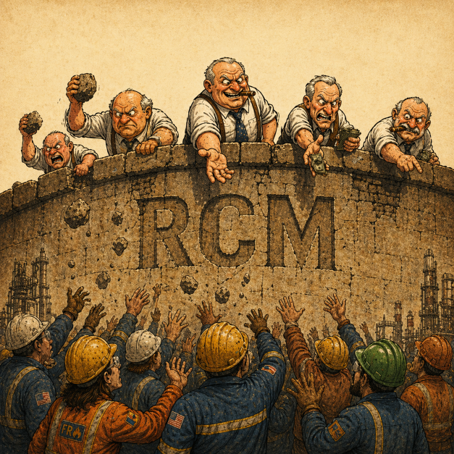
RCM is the wall blocking the path to world-class maintenance. The advice industry has set up a process that uses up a plant’s time, patience, and budget - and fails to reach implementation more often than not. The focus on consultant-driven analysis is blocking the execution improvements you can make today.
Problem Pumps: Deploy, Learn, Modify
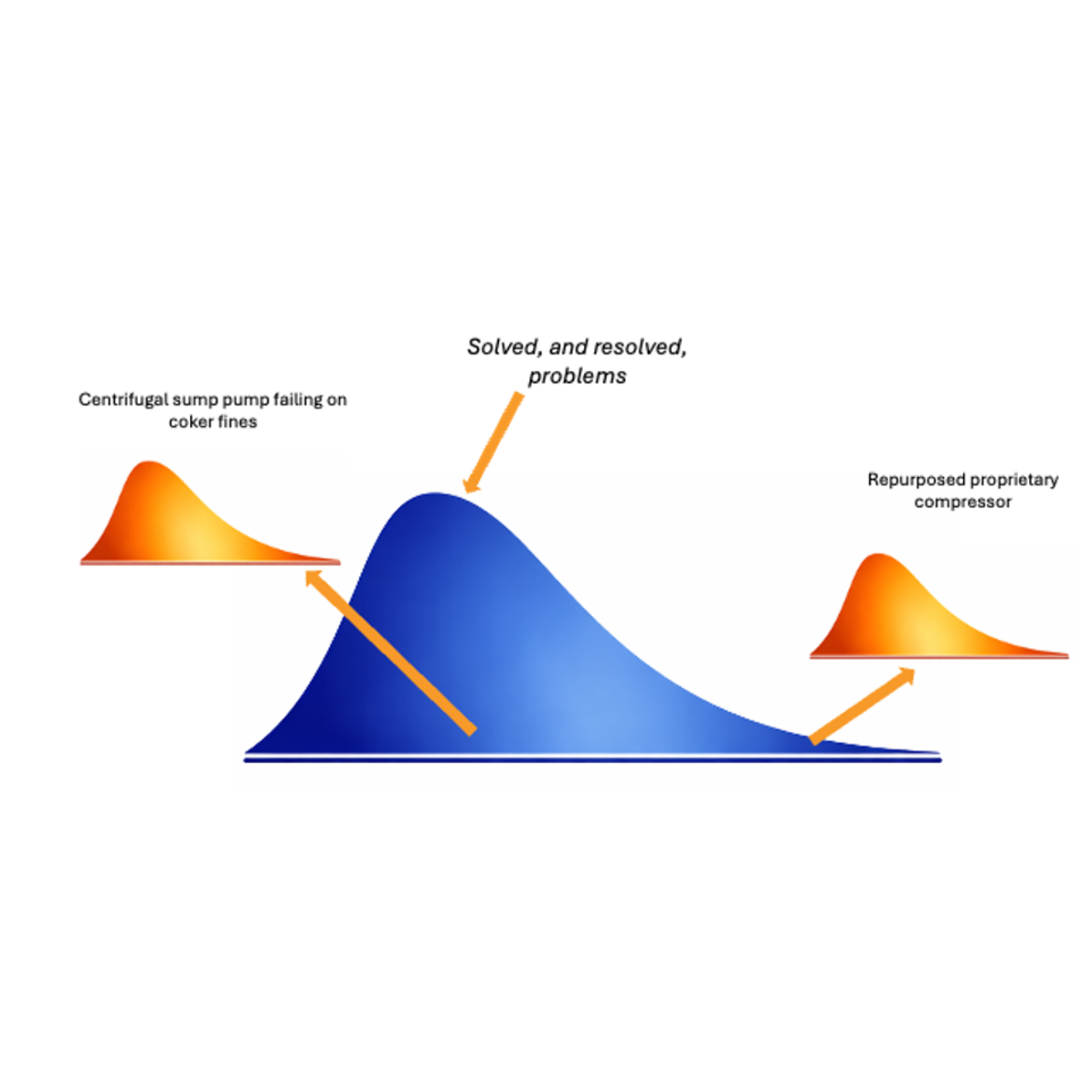
Problem equipment do not need elaborate up front analysis - FMEA, RCA, or otherwise. Deploy the best practice the industry knows already and modify as you learn - either with historical data or with data coming from the standard PM tasks and monitoring. In this example, you can see that FMEA gets you nothing over common sense.

Delta Airlines and Maintenance Value
Delta achieved a 93% reduction in maintenance cancellations through very basic investment in maintenance capability. It is a story of the power of maintenance as a value center, not a cost center or a science project.
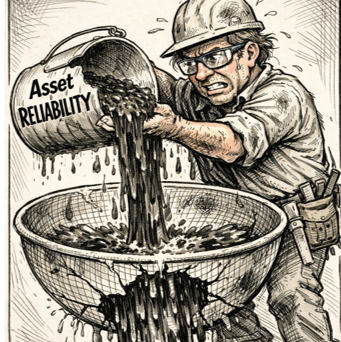
Plugging the Reliability Sieve
AI maintenance platforms are generating confident savings projections built on garbage assumptions: the data scientists do not understand the causal and mitigation chain, nor the associated economics. The deeper problem: both AI and RCM are structurally blind to execution quality, the highest-leverage intervention in reliability. Their decision logic can recommend detection and scheduled prevention, but cannot recommend stopping the introduction of defects in the first place. Prevention produces non-events, non-events produce no data, and data-driven systems systematically undervalue what they cannot see. The path forward is plugging the sieve — execution standards at the point of work — before optimizing the pour rate.
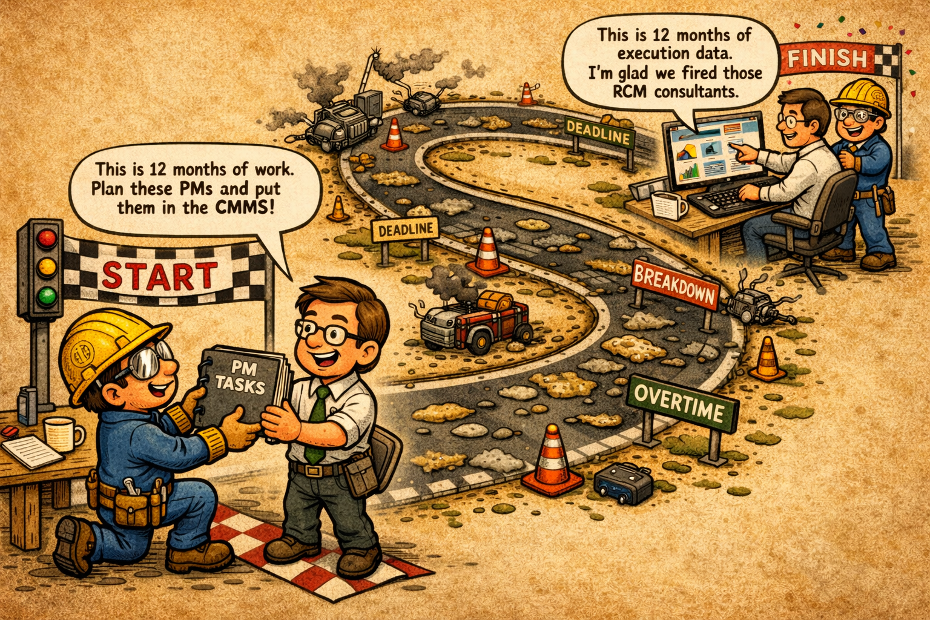
Deploy PMs, Don’t Discover: Learn by Doing
RCM isn't the answer for 80–90% of your equipment. The failure modes are already documented — in OEM manuals, API standards, and decades of field data. Instead of spending months in FMEA workshops re-deriving what's known, deploy best-practice maintenance strategies now and optimize from execution data. This post lays out a practical alternative: compile non-intrusive PM tasks from published sources, deploy them this week, and let a two-loop feedback architecture — execution-level findings and enterprise-level class reviews — make the program smarter every cycle. Four defined review cadences replace the consultant's binder. The result: site-specific evidence that drives real improvement, starting on day one.

The False Idol: An RCM History Lesson
Reliability-Centered Maintenance has a remarkable origin story — and a critical context that its industrial evangelists never mention. Born from a 1960s airline cost crisis, RCM solved a specific problem for standardized fleets under regulatory oversight. Your refinery is neither standardized nor regulated the same way. This post traces RCM's real history, exposes the five lies the consulting industry built on top of it, and explains why the answer to your reliability problems has never been more analysis.