
The CMMS Upgrade Opportunity
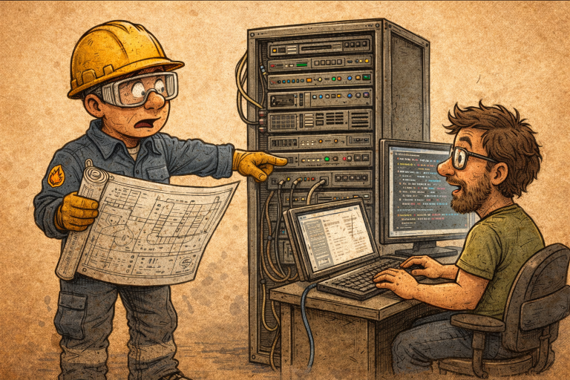
The premise of SamOS, the work we do, and the thinking we’ve posted here is that between one-quarter and one-half of premature equipment failures in a process plant trace back to a maintenance intervention: the bearing installed without an induction heater, the seal reassembled without the flush rate specification, the PM executed on a work order that said "inspect and lubricate" and nothing else.
The fix is the Maintenance Execution Framework — seven enabling conditions that must be present together at the work face for execution to produce rather than destroy equipment life. An Execution Reference that delivers the right information at the moment of action. Precision tools staged and verified. Materials at specification. Equipment properly isolated. Protected time. A verified restart sequence. Structured data flowing back to improve the reference.
That framework requires a platform to run on.
Your computerized maintenance management system (CMMS) is where the Execution Reference lives or doesn't. Where the bill of materials reflects what is actually in the field or doesn't. Where the work order history follows the asset when it moves or disappears into a hierarchy that made sense to the original implementation consultant fifteen years ago. Where failure data means something because the catalog codes are consistent — or means nothing because they're a mix of "other," blank, and whatever the technician felt like typing.
If that platform foundation is wrong, the Maintenance Execution Framework has nowhere to land. The Execution Reference you build is attached to the wrong functional location. The BOM your planner uses to stage parts reflects 2009 before three rounds of modifications that nobody updated in the system. The catalog codes you need to trend bearing failures are so inconsistently applied that your failure history is noise. You can fund every element of the MEF at full cost and still not close the execution gap, because the infrastructure the framework depends on is broken underneath it.
Here is why this is urgent right now: SAP ends mainstream support for ECC at the end of 2027. Maximo 7.6.1 base support ended last year, with Extended Support contracts ending this fall and Sustained Support customers at most 4 years after that. Whether you planned it or not, most maintenance organizations have a platform transition on the horizon — and a closing window to get the foundation right.
The Sins of the Past
Most companies’ CMMS are a repository of sins of the past: a mix of good and bad hierarchies, missing BOMs, inconsistent catalog codes, PM task lists copied and never rationalized. The platform never forced discipline, so most organizations never applied it. The accumulation of that deferred work is sitting in your current system right now.
A migration touches every record. The transition window — before migration tooling runs, while records are accessible in bulk — is the lowest-cost moment your organization will ever have to fix what was never properly built. After migration, that cleanup costs an order of magnitude more and competes with everything else the organization is trying to do in a live production system.
The technician picking up a work order in the field doesn't need a predictive algorithm. They need a work order that tells them what to do, what to bring, where the equipment is, and what the last three people who touched it found. They need a BOM that reflects what is actually installed. They need a functional location hierarchy that puts equipment where it lives so history goes with the machine when it moves. They need a form designed for the field — not for the IT team's idea of what a work order looks like.
That is what good EAM data does. It shows up at the work face, in the first ten minutes of every job, when the technician either has what the MEF requires or they don't.
In today’s world, that data can and must also feed management and executive dashboards, integrated applications, and even advanced analytical platforms. All of this will fail without the right foundation.
This Is a Deploy Moment, Not a Discover Moment
The upgrade is the time to build the infrastructure that execution requires — and the upgrade window is the rarest thing in asset management: a structured, funded, deadline-driven reason to do it.
The hierarchy design, master data quality gates, catalog rationalization, and form redesign that you defer past this window will not get cheaper. They will get more expensive every day the system runs on bad data, and they will compete with live production operations for the attention and resources to fix them. Get the foundation right. The MEF has somewhere to land. Everything else follows from that.
We address the specific decisions — asset hierarchy design, master data quality gates, platform capability gaps, work order lifecycle design, and what to require from your implementation team before the design is locked — in our practitioner note: S/4HANA EAM Implementation: What Maintenance Leaders Need to Address Before the Design Is Locked.
By Peter J. Munson
