
MEF Enablers Self-Evaluation
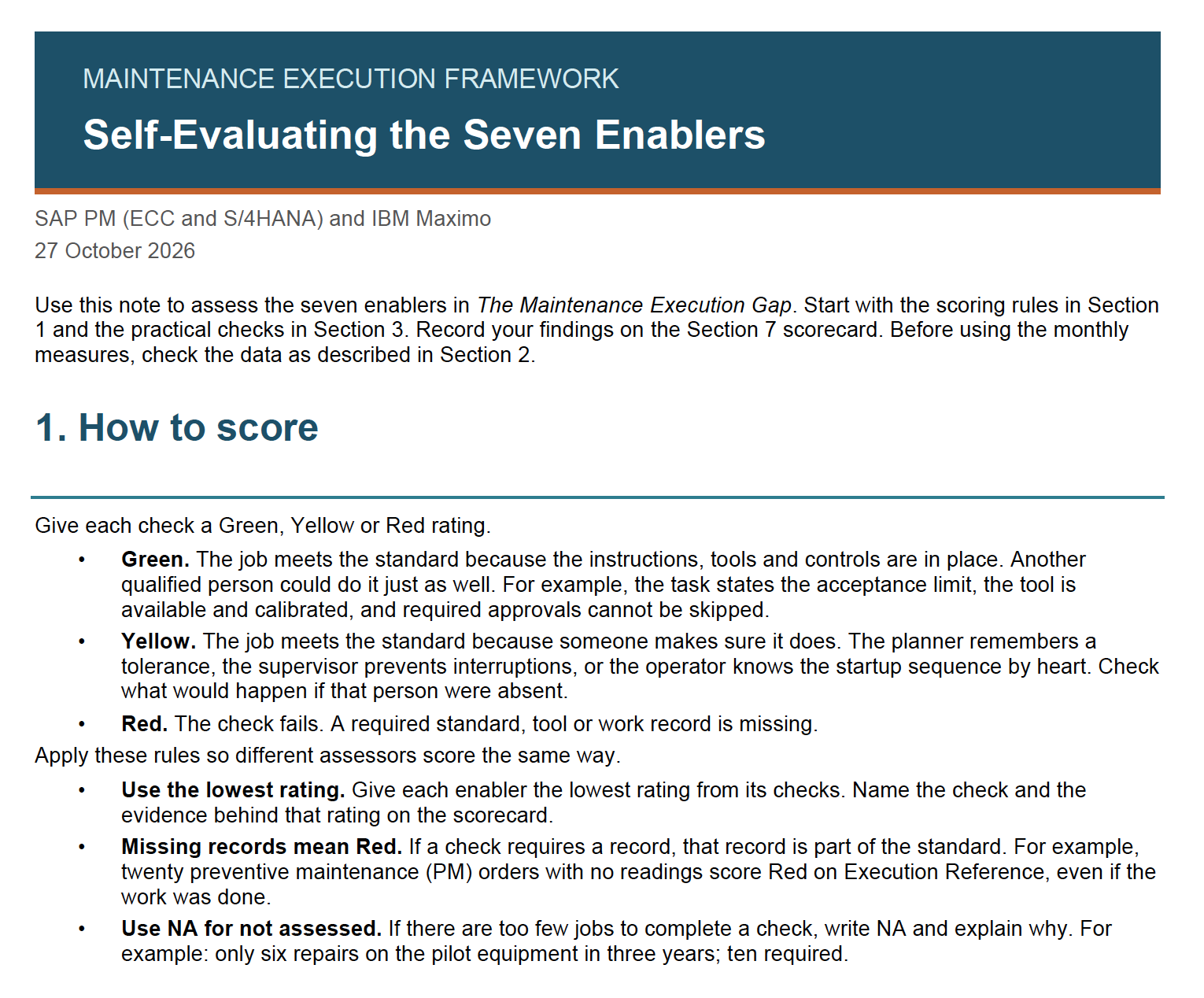
Near the end of the BEMAS webinar on The Maintenance Execution Gap, someone asked the question I should have answered in more detail in the book: how does a plant score itself against the seven enablers?
I gave a short answer on the call. The longer one is now a practitioner note, and it comes down to three moves.
Walk and look first
Each enabler has a check you can do in a morning. Pull the last twenty closed PMs on your worst pump and see whether a single acceptance criterion is written down and a single result recorded against it. Walk the shop and ask to see the tool used on the last large bearing installation. Go to the lube room and pick up the container that oil is poured from. Pull ten repairs and look for any record that the machine was started correctly afterward. None of this needs a login.
Score what you find on three levels
Green means the system produces the result and it would hold if everyone involved were replaced tomorrow. Red means the check fails. Yellow is the mark that matters: the result meets the standard, but a named person is producing it. The planner who remembers the tolerance. The storekeeper who inspects bearings on receipt because he used to be a millwright. Yellow reads as success on every report the plant has, and it vanishes the day that person leaves. At the plants I have assessed in the last decade, most enablers come out Yellow or Red, and the surprise for most managers is how much of what works is Yellow.
Then measure, but test your tags first.
Each enabler gets two numbers a planner can pull from SAP or Maximo and a crew lead can read. Before you trust either, run five checks on the fields they come from: activity type, failure codes, user statuses, measurement documents, confirmations. At most plants those fields were set to a default at go-live and have not been touched since. A number built on a tag nobody sets tells you how the system was configured and nothing about the plant. The note says which checks to run, what fails them, and which measures to withhold until they pass.
The note ends with a one-page scorecard: seven rows, a mark, the evidence the mark rests on, the two numbers, an owner and a next action. The plant's standing is its worst row. That is a conservative rule on purpose; it tells you where to start.
The note is written for SAP PM and Maximo, with the object names for both, and with a line under every number saying what it shows and what it does not, because a proxy read as proof is how a plant talks itself into Green. It is eight pages, and the scorecard is the last one. If you ran it at your plant, I would like to see the row that surprised you.
Download: MEF Self-Evaluation Practitioners’ Note.
